by Anne Motto, F.M. Kirby Curator of Collections
November 3, 2026
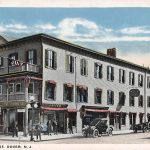
Hurd’s Tavern and its successor, Mansion House, were intricately intertwined with the history of Dover, evolving in tandem with the development of the town. Situated at the corner of Blackwell Street and Sussex Street, the establishment witnessed the town’s earliest days and grew alongside its community as new industries and transportation routes brought an influx of travelers to the area.
Jacob Hurd first opened his tavern in the mid-1820s when Dover was in its infancy. At the time, NYC iron magnates Joseph Blackwell and Henry McFarlan had recently laid out a plan for the town and offered lots for sale. The Morris Canal, which would traverse the burgeoning village, was also under construction, promising to bring industry and development to the area. Hurd’s Tavern was therefore ideally situated to be a gathering place for a wider clientele of both new residents and travelers along the canal.
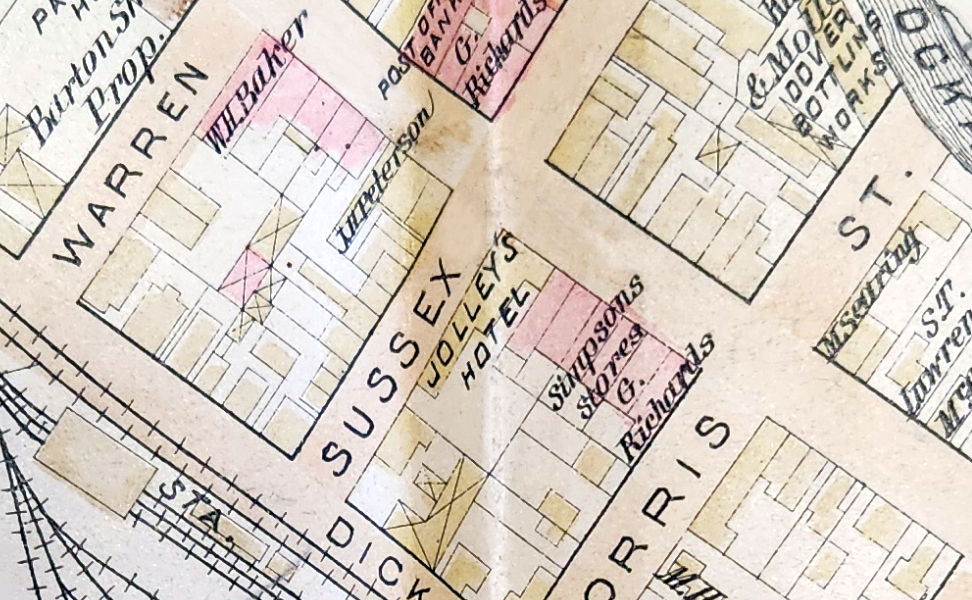
By the mid-19th century, as railroads began to eclipse the canal as the most efficient form of travel, multipurpose taverns such as Hurd’s were being supplanted by hotels, restaurants, and saloons. Thus, when Isaac B. Jolley and a partner leased the establishment just two years after the railroad reached Dover, they quickly transformed it into a large hotel. With the town now the western terminus of the Morris & Essex Railroad, they also capitalized on the establishment’s location, positioning it as a hub for travelers switching from eastern trains to stagecoaches going west. In the earliest years, Jolley and his partner even operated a stagecoach company that ushered passengers from their hotel to Succasunna, Stanhope, Newton, Sparta, and Hackettstown. Proving a great success, the hotel was purchased by Jolley outright in 1859. While its name was officially Mansion House, from that time on, it was more often simply called “Jolley’s Hotel” after the man who operated it until his death in 1891.
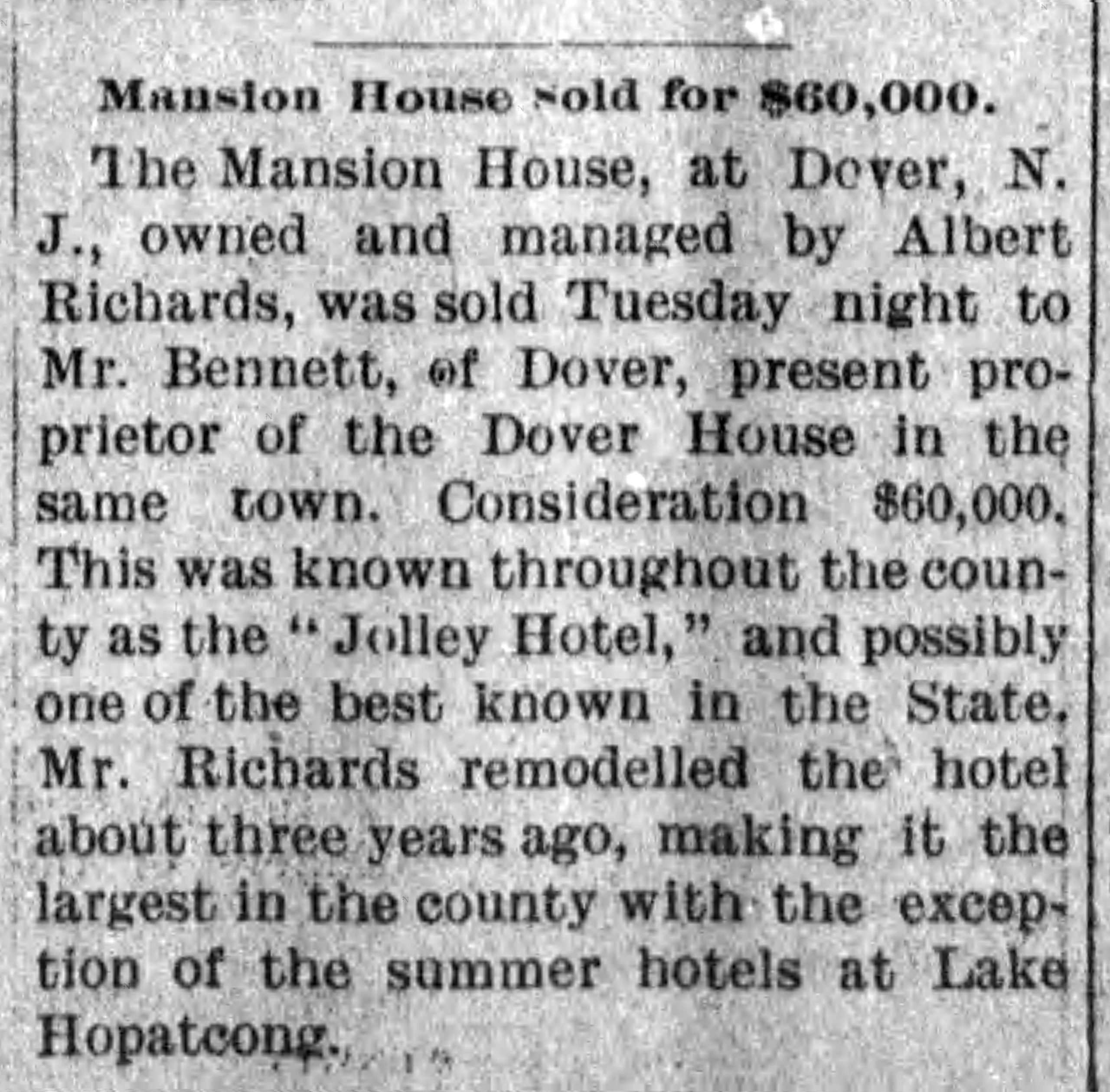
Several other owners would follow, and the hotel was once again expanded around 1902 to reputedly become “the largest in the county with the exception of the summer hotels at Lake Hopatcong.” However, as local industries changed and faded away, Mansion House began to struggle. Ultimately sold in a sheriff’s sale, it was demolished in 1936 to make way for a Woolworth’s, removing a one-time fixture of the community from Dover’s landscape.
To learn more about Mansion House and other local establishments, don’t miss our current exhibit, Fermenting a Communal Spirit: Morris County Tavern, Speakeasies & Social Clubs, on display through the end of 2026.