by Anne Motto, F.M. Kirby Curator of Collections
October 20, 2026
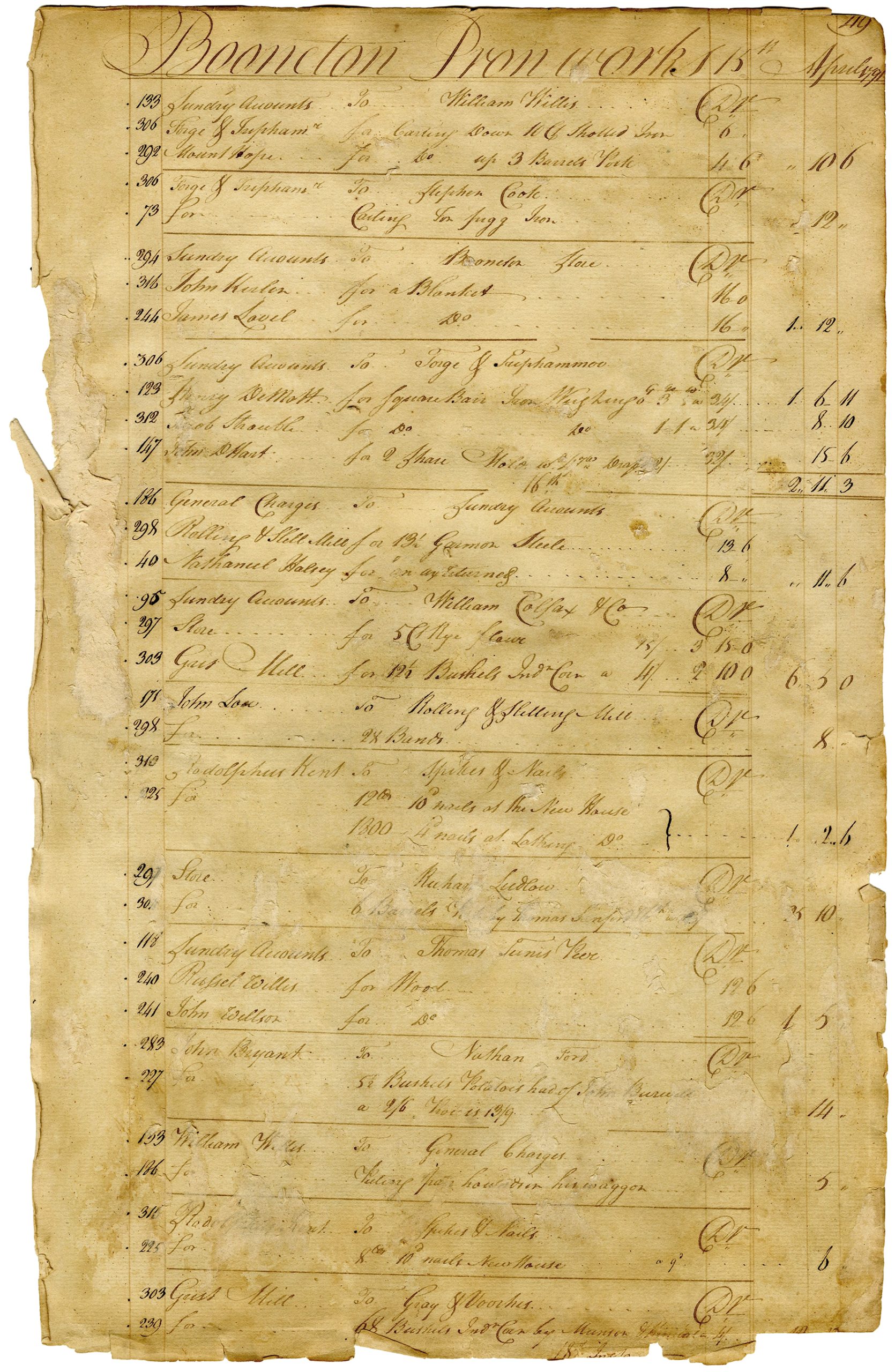
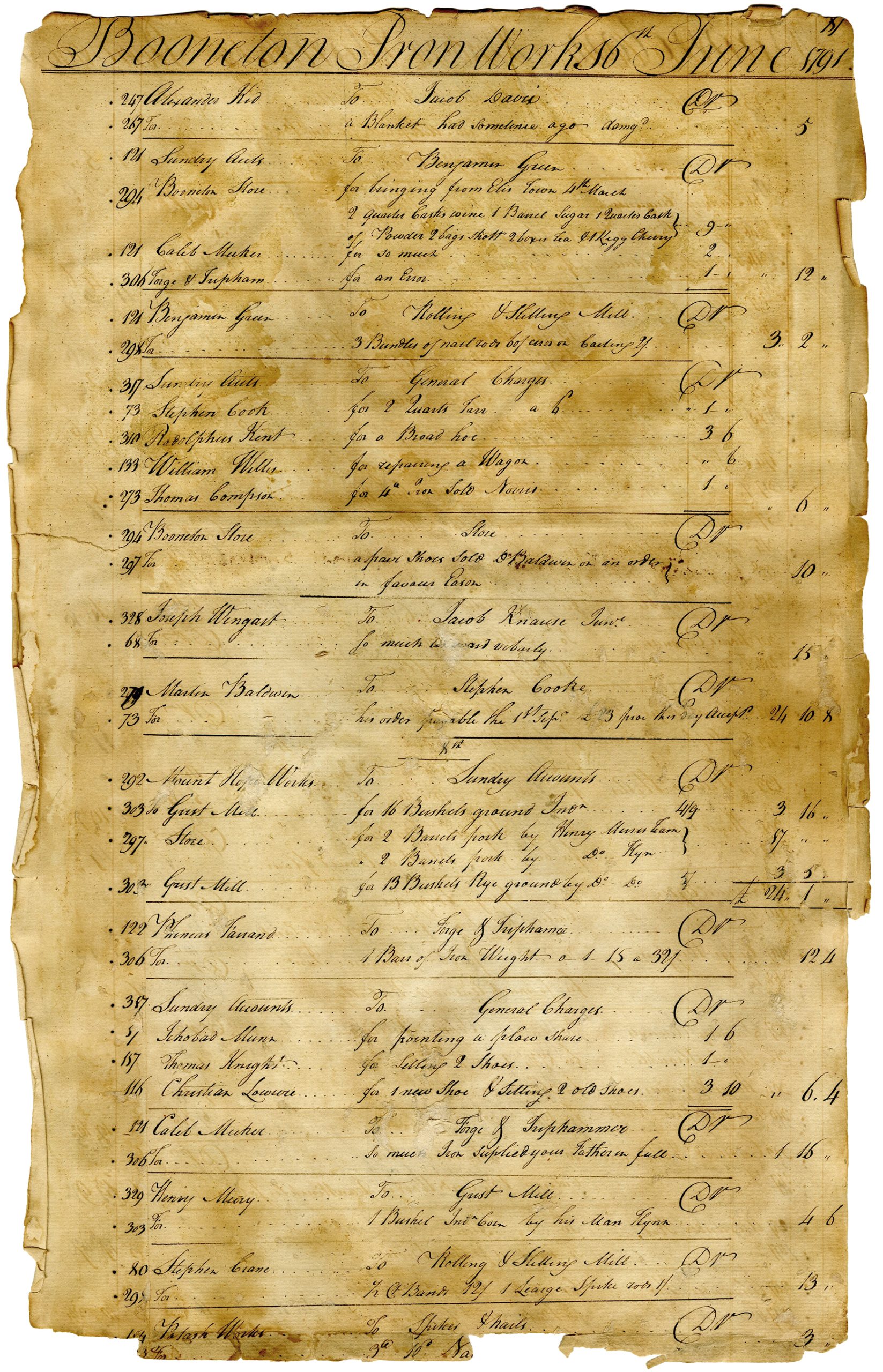
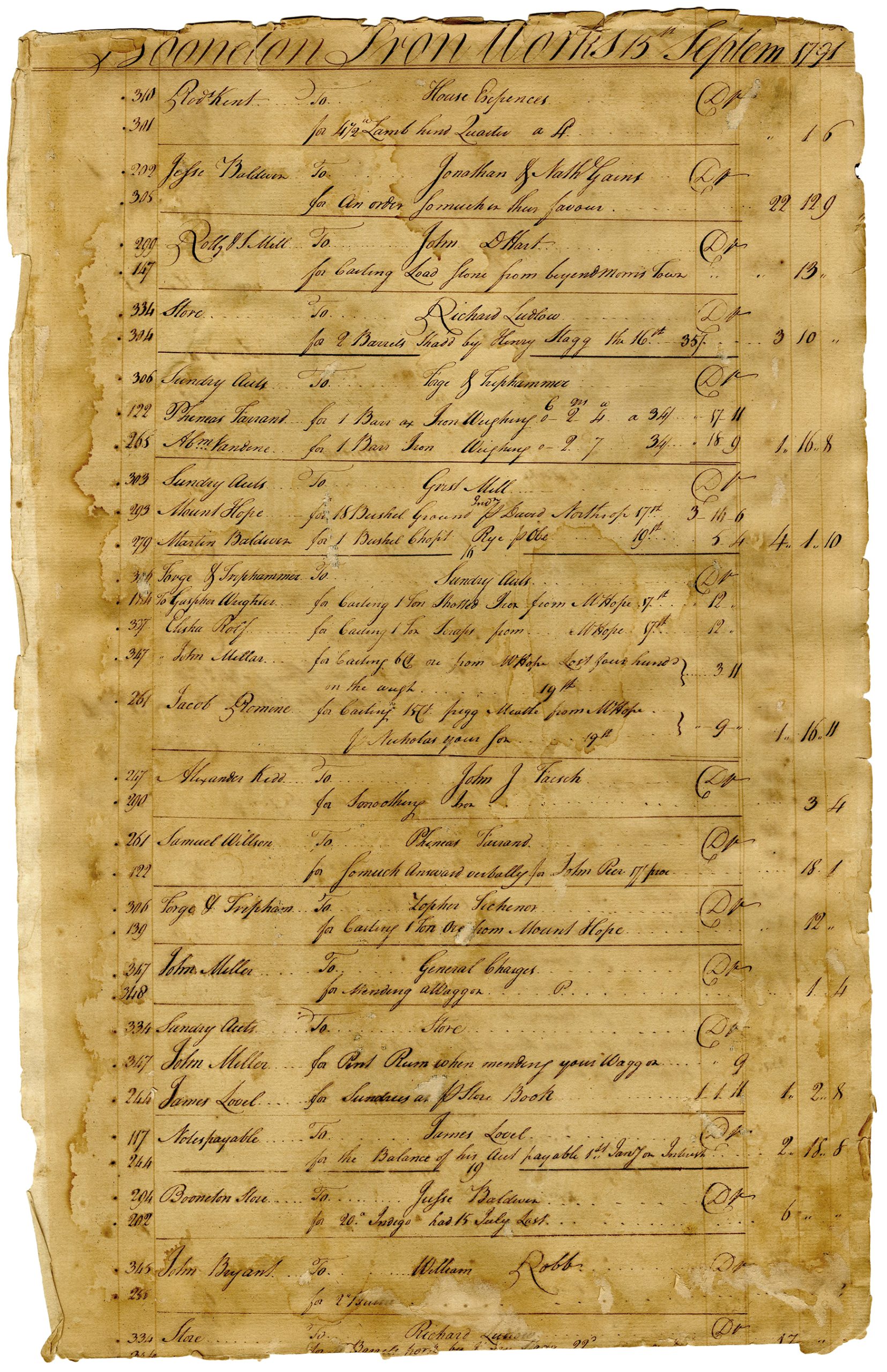
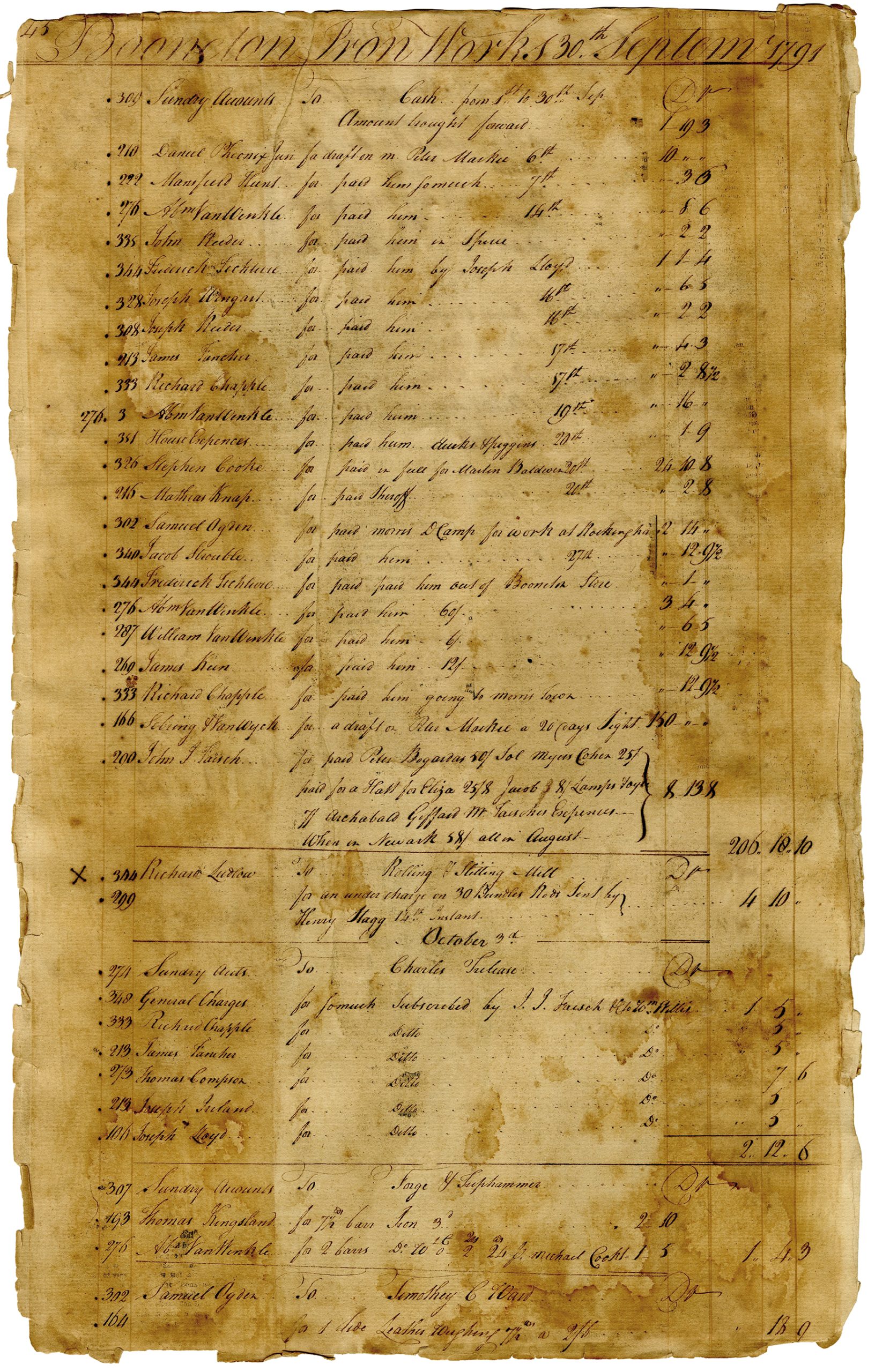
In MCHS archives is a fascinating artifact from Morris County’s defining industry: a large, leatherbound ledger from the Boonton Ironworks dating to 1791. Most likely saved by what nearly obliterated it, that the ledger survived at all is probably thanks to it being turned into a scrapbook around 1853 and pasted over with newspaper clippings, drawings, and prints. However, a few pages were spared, providing a peek into the operation under the leadership of famed local ironmaster John Jacob Faesch.
Boonton’s history was intimately connected to the iron industry, tracing back to its earliest days in the mid-18th century when Obadiah Baldwin and then David Ogden operated works in the area. In 1765, Ogden’s son Samuel, a recent graduate of King’s College (today Columbia University), took over management of his father’s ironworks and soon expanded the enterprise across the Rockaway River, building a rolling and slitting mill with backing from his brother and brother-in-law. Following the Revolution, Ogden leased the works for 20 years to John Jacob Faesch, who during the war provided the Continental army with ammunition and supplies from his Mt. Hope Ironworks. Faesch then moved to Boonton and managed the Boonton Ironworks until his death in 1799.
While for now, only the pages from April 15, June 6, September 15, and September 30 are unobscured, the other pages are still faintly visible through the newsprint, and it is hoped that through conservation, more of the original pages can ultimately be revealed, perhaps shedding even greater light on this key chapter of local history.