by Anne Motto, F.M. Kirby Curator of Collections
January 21, 2025
Morris County’s history was forged by the iron industry. The bedrock of the local economy, it was integral to the founding and development of our communities. Shafts, pits, and tunnels sprawled across the county’s ore-rich mountains, supplying local forges and leaving few aspects of life untouched. Iron mining’s deep history in Rockaway, especially, can be traced all the way from the earliest days of the 18th century to the late 1970s, leaving its mark and its legacy across the landscape.
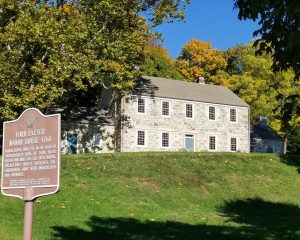
One of the oldest, if not the oldest, mines in the entire US was Rockaway’s Mt. Hope Mine. First opened around 1710, it would not permanently close until 1978, and over its lifetime yielded close to 6,000,000 tons of ore – the most of any NJ mine. Beginning in 1772, it became part of an integrated iron plantation under ironmaster John Jacob Faesch and its forges produced ammunition, munitions, and tools for the Continental Army. The operation Faesch started continued until 1827, and in 1831, the Mt. Hope Mining Co. was formed. That same year the Morris Canal opened, bringing much needed Pennsylvania coal to fuel the furnaces and fires the mine’s iron ore then supplied. Production struggled in the 1880s as local mining was outcompeted by Midwestern enterprises, and the Great Depression closed the mine entirely. However, WWII created new demand, and Mt. Hope, once again valuable to a war effort, was reopened. It also reached even greater depths with its New Leonard Shaft, the only one operating from 1944, reaching 2,694 feet into the earth. Closed again in 1959, the final chapter of its 270-year history came in 1978 after it briefly opened one last time.
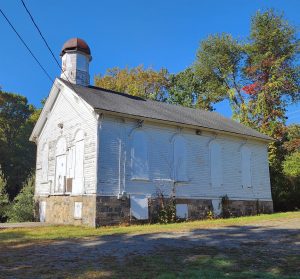
Many other mines of varying size were dug in Rockaway over the centuries. The Richard Mine, named for John Jacob Faesch’s youngest son, Richard Brickerhoff Faesch, was one of the most significant. During the Morris Canal’s heyday, ore from it was brought by mule-drawn tram down to the waterway, and beginning in 1867, by the specially built Mt. Hope Mineral Railroad, which also connected to the nearby Mt. Hope Mine. Richard Mine was later consolidated with the Allen and Teabo Mines, and together were worked almost continuously from 1856 to the 1950s. Exploiting two veins, they ultimately yielded around 5,700,000 tons of iron ore. Beginning in 1991, the Morris County Park Commission acquired parcels of land formerly part of the mine’s property. Today, the historical park encompasses 479 acres, including several former shafts, smokestacks, a water tower, and the Mt. Hope Miners’ Church.
Up to the 20th century, mining remained Rockaway’s predominant industry and the primary driver of its development. Its mining operations, which over the years reputedly topped 200, drew skilled and unskilled workers, investors, and a myriad of supporting businesses to the area, helping lead to the township’s incorporation as Morris County’s 12th municipality in 1844. At the industry’s peak, its Mt. Hope, Richard, and Hibernia mines were responsible for 50% of all iron ore pulled from the ground in the state. While none operate today, they are still entwined in the fabric, history, and landscape of the community.

Did you enjoy this blog? MCHS is an independent nonprofit. Please consider supporting our mission at morriscountyhistory.org/donate or become a member at morriscountyhistory.org/get-involved/ to help us continue to preserve and promote Morris County history through programs, exhibits, and blogs like this.

